

DDR logo
DDR logo
Abstract image with diagonal bands of blue tones fading into black, creating a gradient effect from bright cyan top left to dark blue and black bottom right.

Excellent decisions start with clarity

Excellent decisions start with clarity

DDR builds the conditions for clear, executable decisions that compound over time.


DDR builds the conditions for clear, executable decisions

that compound over time.

How Strong is Your Decision Clarity?

A short adaptive conversation. In 10 to 15 minutes, you'll see exactly where your decision-making holds and where it doesn't.

Excellent decisions start with clarity

DDR builds the conditions for clear, executable decisions that compound over time.


How Strong is Your Decision Clarity?

A short adaptive conversation. In 10 to 15 minutes, you'll see exactly where your decision-making holds and where it doesn't.

WHY DDR EXISTS

The best decision makers decide differently.

The best decision makers decide differently.

The best decision-makers aren't operating on better information. They are operating from a better decision posture. The Decision Clarity Cycle is how you build it.


DDR strengthens the posture from which critical decisions are made. Built for leaders and organisations that need clarity that translates into better decisions and stronger alignment.


A clear-eyed assessment of where decision-making holds, where it breaks, and what needs to change to improve decision quality at scale.

The best decision-makers aren't operating on better information. They are operating from a better decision posture. The Decision Clarity Cycle is how you build it.


DDR strengthens the posture from which critical decisions are made. Built for leaders and organisations that need clarity that translates into better decisions and stronger alignment.


A clear-eyed assessment of where decision-making holds, where it breaks, and what needs to change to improve decision quality at scale.

Diagram illustrating the decision clarity cycle

3%


knowledge deficits account for 3% of high-stakes decision failures. Which means almost everything organisations spend on capability development is addressing the wrong problem.


CROSKERRY, 2021


3%


knowledge deficits account for 3% of high-stakes decision failures. Which means almost everything organisations spend on capability development is addressing the wrong problem.


CROSKERRY, 2021


3%


knowledge deficits account for 3% of high-stakes decision failures. Which means almost everything organisations spend on capability development is addressing the wrong problem.


CROSKERRY, 2021


71%


of senior executives say it takes up to nine months to feel fully effective in a new role. The capability was never the constraint. The conditions were.


C-SUITE PRIORITIES 2026 -

GREEN PARK / WINMARK / CIPD

14,000 EXECUTIVES

71%


of senior executives say it takes up to nine months to feel fully effective in a new role. The capability was never the constraint. The conditions were.


C-SUITE PRIORITIES 2026 -

GREEN PARK / WINMARK / CIPD

14,000 EXECUTIVES

71%


of senior executives say it takes up to nine months to feel fully effective in a new role. The capability was never the constraint. The conditions were.


C-SUITE PRIORITIES 2026 - GREEN PARK / WINMARK / CIPD

14,000 EXECUTIVES

1 in 4

senior leaders say their decision-making processes do not adequately support their organisation's needs. That figure has not improved in two years. The process is not the answer.


LHH VIEW FROM THE C-SUITE 2026

2,530 ORGANISATIONS WORLDWIDE

1 in 4

senior leaders say their decision-making processes do not adequately support their organisation's needs. That figure has not improved in two years. The process is not the answer.


LHH VIEW FROM THE C-SUITE 2026

2,530 ORGANISATIONS WORLDWIDE


1 in 4

senior leaders say their decision-making processes do not adequately support their organisation's needs. That figure has not improved in two years. The process is not the answer.


LHH VIEW FROM THE C-SUITE 2026

2,530 ORGANISATIONS WORLDWIDE

530k

days of managers' time lost to ineffective decision-making every year in a typical large organisation. That is not a process problem. It is a governance problem.


MCKINSEY GLOBAL SURVEY

1,200+ EXECUTIVES


530k

days of managers' time lost to ineffective decision-making every year in a typical large organisation. That is not a process problem. It is a governance problem.


MCKINSEY GLOBAL SURVEY

1,200+ EXECUTIVES


530k

days of managers' time lost to ineffective decision-making every year in a typical large organisation. That is not a process problem. It is a governance problem.


MCKINSEY GLOBAL SURVEY

1,200+ EXECUTIVES


WHERE THE STAKES ARE HIGHEST

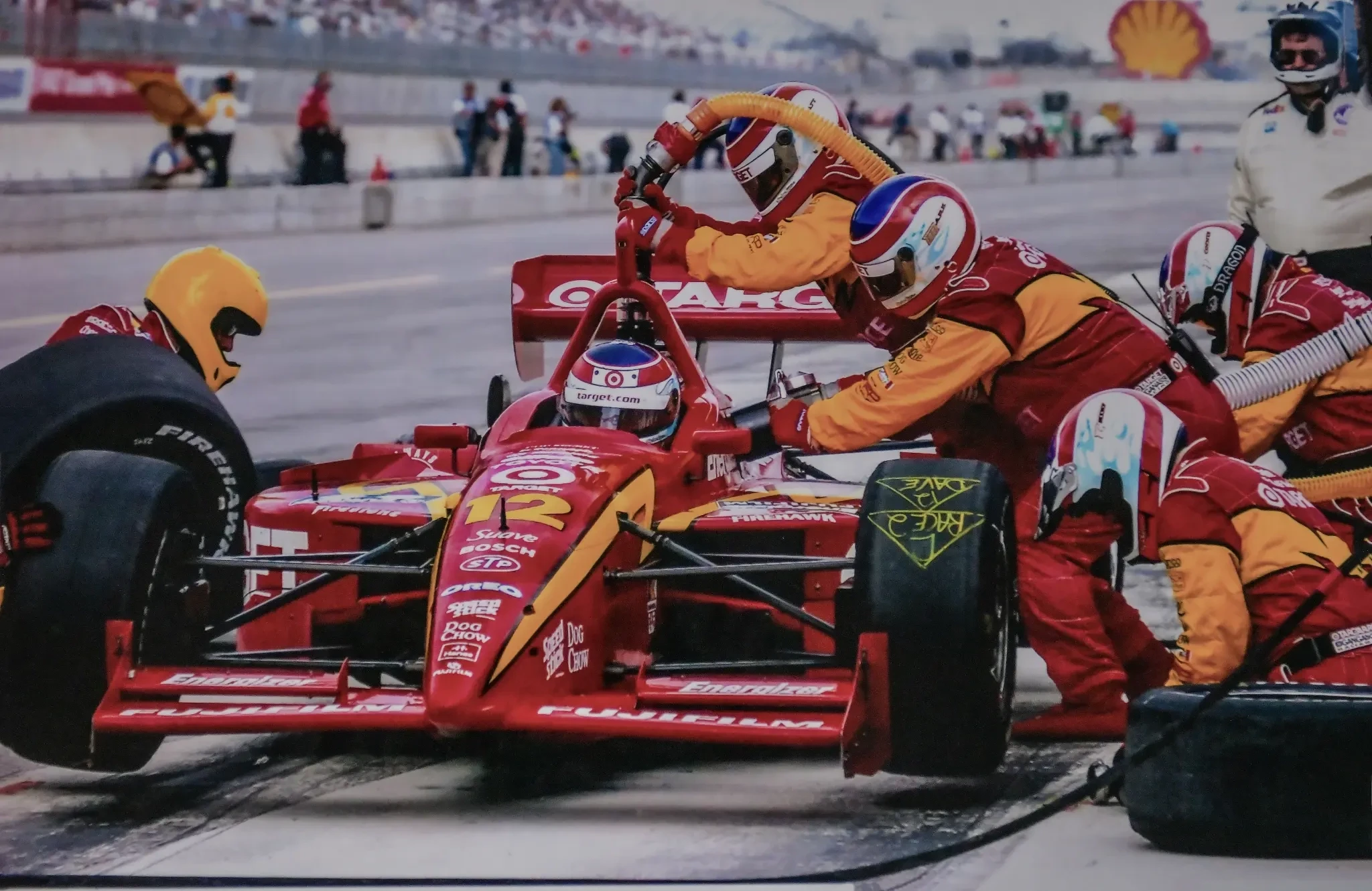
High-consequence industries don't leave decisions to the moment.

High-consequence industries don't leave decisions to the moment.

Every industry where a bad decision is unrecoverable has already solved this.

They solved it by building the system AND trusting smart people.

Every industry where a bad decision is unrecoverable has already solved this.

They solved it by building the system AND trusting smart people.

Every industry where a bad decision is unrecoverable has already solved this. They solved it by building the system AND trusting smart people.

Turqoise dark abstract background

The boardroom is no different. The cost just arrives later, and is harder to trace back to the moment it began.

The boardroom is no different. The cost just arrives later, and is harder to trace back to the moment it began.

The boardroom is no different. The cost just arrives later, and is harder to trace back to the moment it began.
A timeline diagram tracing five research streams in decision science from 1970 to 2026, with brief summaries for each stream and a final note on the clarity of decisions.

THE SCIENCE BEHIND IT

Sixty years of research identified what goes wrong. Nobody built the layer that prevents it.


Five research streams, one finding: decision quality is determined before the decision is made — by the quality of the thinking that precedes it. None of them produced the architecture that operates at that moment.


DDR does.

A timeline diagram tracing five research streams in decision science from 1970 to 2026, with brief summaries for each stream and a final note on the clarity of decisions.

THE SCIENCE BEHIND IT

Sixty years of research identified what goes wrong. Nobody built the layer that prevents it.


Five research streams, one finding: decision quality is determined before the decision is made — by the quality of the thinking that precedes it. None of them produced the architecture that operates at that moment.


DDR does.

THE DECISION CLARITY CYCLE

Four segments. Every decision touches all of them.

Four segments. Every decision touches all of them.

The Decision Clarity Cycle runs continuously. Each pass building on the last, sharpening the pattern and compounding quality because every decision within an organisation is connected, and leadership operates within that evolving cycle.

The Decision Clarity Cycle runs continuously. Each pass building on the last, sharpening the pattern and compounding quality because every decision within an organisation is connected, and leadership operates within that evolving cycle.

THE DECISION CLARITY INTERVIEW

The Adaptive Decision Clarity Interview

The Adaptive Decision Clarity Interview

One interview, built to adapt. As you answer, it moves between your own decisions and the ones made around you — surfacing where clarity holds and where it doesn't, without you having to choose which lens to use first.

One interview, built to adapt. As you answer, it moves between your own decisions and the ones made around you — surfacing where clarity holds and where it doesn't, without you having to choose which lens to use first.

You don't pick a track before you start. Answer as yourself, as a leader, or both. The interview follows where your decisions actually lead, then returns a finding specific to what it found there.

HOW WE WORK

DDR does not start with options. It starts with the system that produces them.

DDR does not start with options. It starts with the system that produces them.

A five-part approach, for one person or many.

A five-part approach, for one person or many.

A five-part approach, for one person or many.

Step 1

Step 1

Discovery Conversation

A structured conversation about how decisions get made under pressure — whether that's you alone, you and a co-founder, a leadership team, or a board. Not to find what's wrong, but to see clearly where the process already works, and where pressure is quietly getting in the way of people's best thinking.

A structured conversation about how decisions get made under pressure — whether that's you alone, you and a co-founder, a leadership team, or a board. Not to find what's wrong, but to see clearly where the process already works, and where pressure is quietly getting in the way of people's best thinking.

Step 2

Step 2

Assessment

Assessment

Each person involved completes their own Decision Clarity Interview — whether that's one person or several — producing a specific finding for their own decision-making before anything is compared.

Each person involved completes their own Decision Clarity Interview — whether that's one person or several — producing a specific finding for their own decision-making before anything is compared.

Each person involved completes their own Decision Clarity Interview — whether that's one person or several — producing a specific finding for their own decision-making before anything is compared.

Step 3

Step 3

Feedback

Findings return to each person individually — and where more than one person is involved, they combine into a shared picture: where operating styles align, where they create friction, and what that friction is costing the decisions that matter most right now.

Findings return to each person individually — and where more than one person is involved, they combine into a shared picture: where operating styles align, where they create friction, and what that friction is costing the decisions that matter most right now.

Step 4

Step 4

Bespoke Architecture

A tool built for how you decide, alone or together. Mapped to the Decision Clarity Cycle, and used to keep your best judgement accessible for whatever comes next.

A tool built for how you decide, alone or together. Mapped to the Decision Clarity Cycle, and used to keep your best judgement accessible for whatever comes next.

Step 5

Step 5

Ongoing Calibration

Decision quality compounds through consistent use. Ongoing calibration keeps your access to it current as you, the pressure, and the decisions in front of you change.

Decision quality compounds through consistent use. Ongoing calibration keeps your access to it current as you, the pressure, and the decisions in front of you change.

Ready to see how your team decides?

Ready to see how your team decides?

Ready to see how your team decides?

Start with a conversation. No pitch, no agenda. Just a clear look at how your team makes decisions today, and how well that holds under pressure.

Start with a conversation. No pitch, no agenda. Just a clear look at how your team makes decisions today, and how well that holds under pressure.

Start with a conversation. No pitch, no agenda. Just a clear look at how your team makes decisions today, and how well that holds under pressure.