


"When I want Claude's opinion, I'll ask Claude."
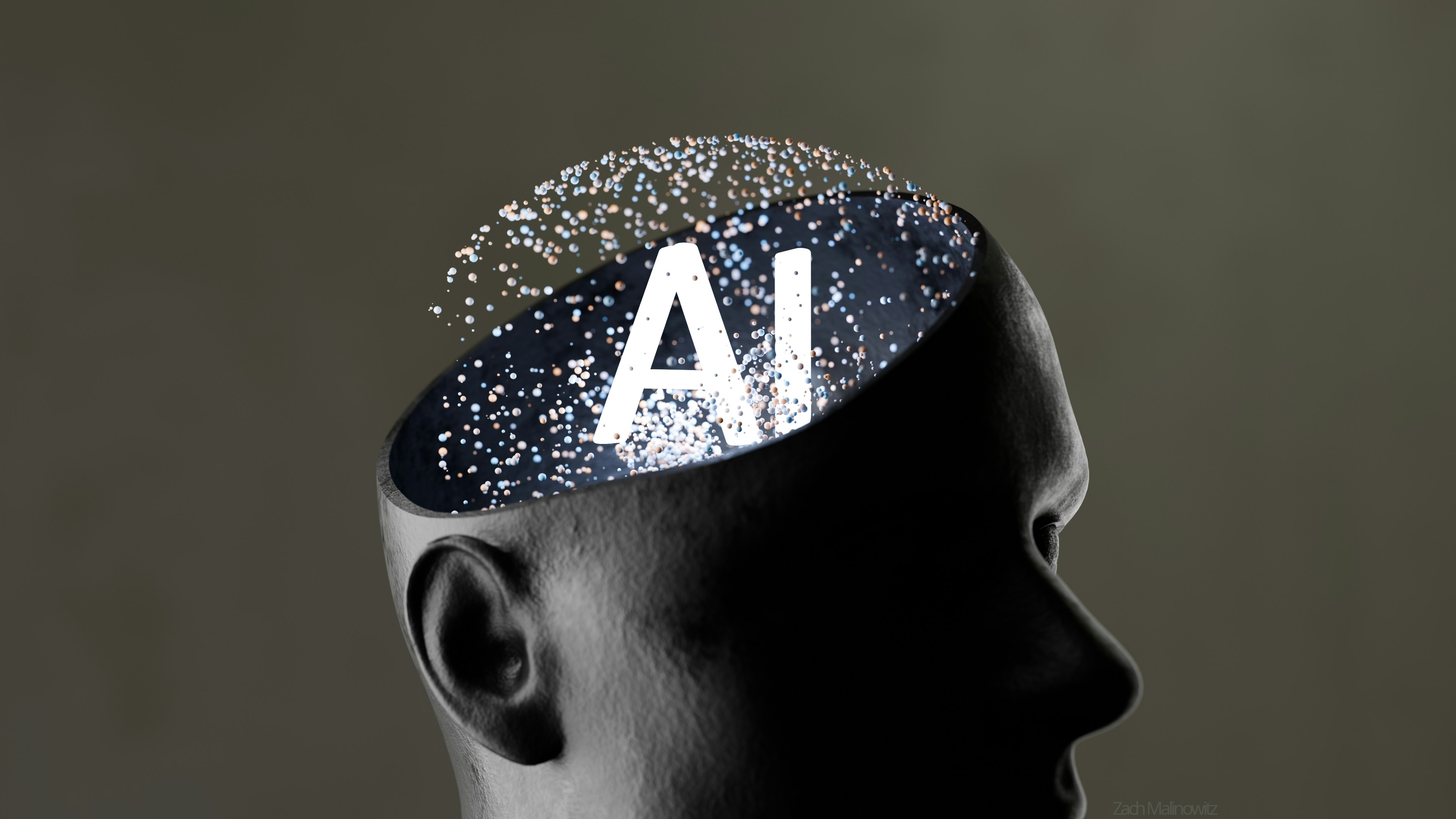
A response to Chris Best on AI, authorship, and what a detection score can't tell you
Chris Best just asked the right question about AI content. Here's the answer he's looking for.
Chris Best CEO and Founder of Substack published something worth reading this week. Substack is rolling out AI-detection scores on posts and notes, built with a company called Pangram, and his explanation of why is more careful than most of what's been written on this subject in the last two years.
He's not arguing AI-assisted writing is fake by definition. He says so directly: not everything made with AI is slop, and some of the platform's best people are, in his words, "publicly exploring the frontier of using AI tools while sweating the details to make work they stand behind." The actual problem he names is narrower and more precise than the usual argument: a mismatch between what a reader expects and what they're getting. Reading something as one person's considered view when no one considered it. He calls that Claudefishing, and it's a good name for a real problem.Then he closes with a line I think is the whole thing in one sentence: when he wants Claude's opinion, he'll ask Claude.
I want to answer the question he's actually asking, because he asked it directly: when is AI use Claudefishing, and when is it great?Here's my answer. It was never about whether AI touched the page. It's about whether the work was governed, or just generated!
What governed actually means
Every word an AI model produces was built from human input, somewhere, at some point. There's no such thing as content that's "just AI" in some pure sense. What there is, is a difference between AI left to its own devices and AI operating inside a standard that decides what gets used, what gets checked, and what a person is willing to stand behind before it goes out. That difference is the entire question Best is circling. I'd rather ground this in evidence than assert it. A 2024 meta-analysis of 106 studies of human-AI collaboration found that on decision-making tasks, teaming up produced worse outcomes on average than the better of the human or the AI working alone.
What was actually tested: unstructured collaboration, a person and a model working a problem with no agreed standard for what gets verified or challenged before it's used. None of those studies tested a governed process against an ungoverned one, so I won't claim the research proved my argument. It didn't test my argument. But if teaming up without any standard produces worse decisions than either party alone, that's exactly what you'd expect when nothing is filtering out a person's anchoring and fatigue, and nothing is checking the model's fluent confidence either. The same review found the opposite pattern for content creation: real gains, not losses, from human-AI collaboration. That's the category this piece sits in.
The cost of the ungoverned version is measurable, not theoretical. A 2025 study of 666 people found a real link between heavy AI use and declining critical thinking, traced to cognitive offloading: hand over the thinking along with the task, and the capacity quietly atrophies from disuse. A study of radiologists found unaided tumour-detection skill dropped after three months of AI-assisted work, not because the AI was wrong, but because the humans stopped exercising the judgement themselves. Several of the same studies found that AI tends to mirror whatever habits a person already has, rather than improving them. I don't read that as an argument against building a standard around it. I read it as the entire case for one. Left alone, the tool hands you back your own habits, faster and more confident. Governed properly, that's precisely the layer whose job is to catch the anchoring and the overconfidence before they reach the page.
What I actually do, plainly stated
Every piece I publish through Don't Delay Reality AI process gets built the same way. Identify the claims. Verify them independently against a primary source. Surface anything contested or resting on one account before a word gets drafted. Only then write from the confirmed base. AI does the research, the drafting, the pattern-matching, all of it faster than I could alone and without the fatigue I'd bring in by 11pm. I decide what's admissible. I read every finished piece in full before it goes out, slowly, deliberately, checking it says what I actually mean and not just what reads smoothly. That's not a technicality. It's the entire method.
That's also the honest answer to Best's actual question. A detection score can flag statistical fingerprints in the prose. It can't tell a reader whether the claims were checked, whether a contested finding was surfaced honestly, or whether a person actually stood behind the argument before it went out. Those are the things that matter, and none of them show up in a percentage.
What I'm doing about it
Starting with this piece, every article and post I publish under Don't Delay Reality will carry a standing statement, using the exact tool Substack has just built for this: how I make this, plainly, at the end.
Research and drafting, AI-assisted, every claim checked against its source, every argument is mine. Read in full before publication, System 2 engaged, not skimmed, checking it says what I mean.
A detection score can tell you a tool was involved. It can't tell you who had the thought first, who threw out the weak argument, who checked every claim, or who's putting their name to every line.
I'd rather show you the standard than ask you to trust a score.
Built through AI with DDR's governed process. I take ownership: the judgement, the checks, and the argument are mine.
