
Where Super Sophia came from
While I was growing up, nobody taught me how my brain works or how to make decisions. I worked it out late, and I wanted my daughters to have it early. In words they can use, and in ways they can understand.
Just before she turned five, my daughter Sophia came to me and said, "Daddy, I can't concentrate. My mind wants to think about googol amount of things at one time."
I told her, "You just need to practise, and then you'll be able to do one thing at a time and do it very well. And that will make you Super Sophia."
Her mind moves faster than she can keep up with. She isn't naughty. She's fast.
We talked about all the things Super Sophia would have to be able to do. Sophia said that when she was big, she'd be able to do all of them: read, draw, go to the toilet when she needed to, and do big-girl things. She'd be clever, too. And she'd be brave, so she wouldn't be scared of hand dryers.
Then she said she wanted Big Sophia "to remember me to go to the toilet".
That's where Big Sophia, Clever Sophia and Brave Sophia came from. She also asked for Toilet Humour Sophia. We decided that wasn't quite right, and changed it to Silly Sophia.
The books are built on the names she chose.
Inside Sophia's head
Every child has their own Luca, Henry and Bella, their own eels and their own sky. So does every grown-up.
All the Sophias are Sophia: different sides of the same girl.

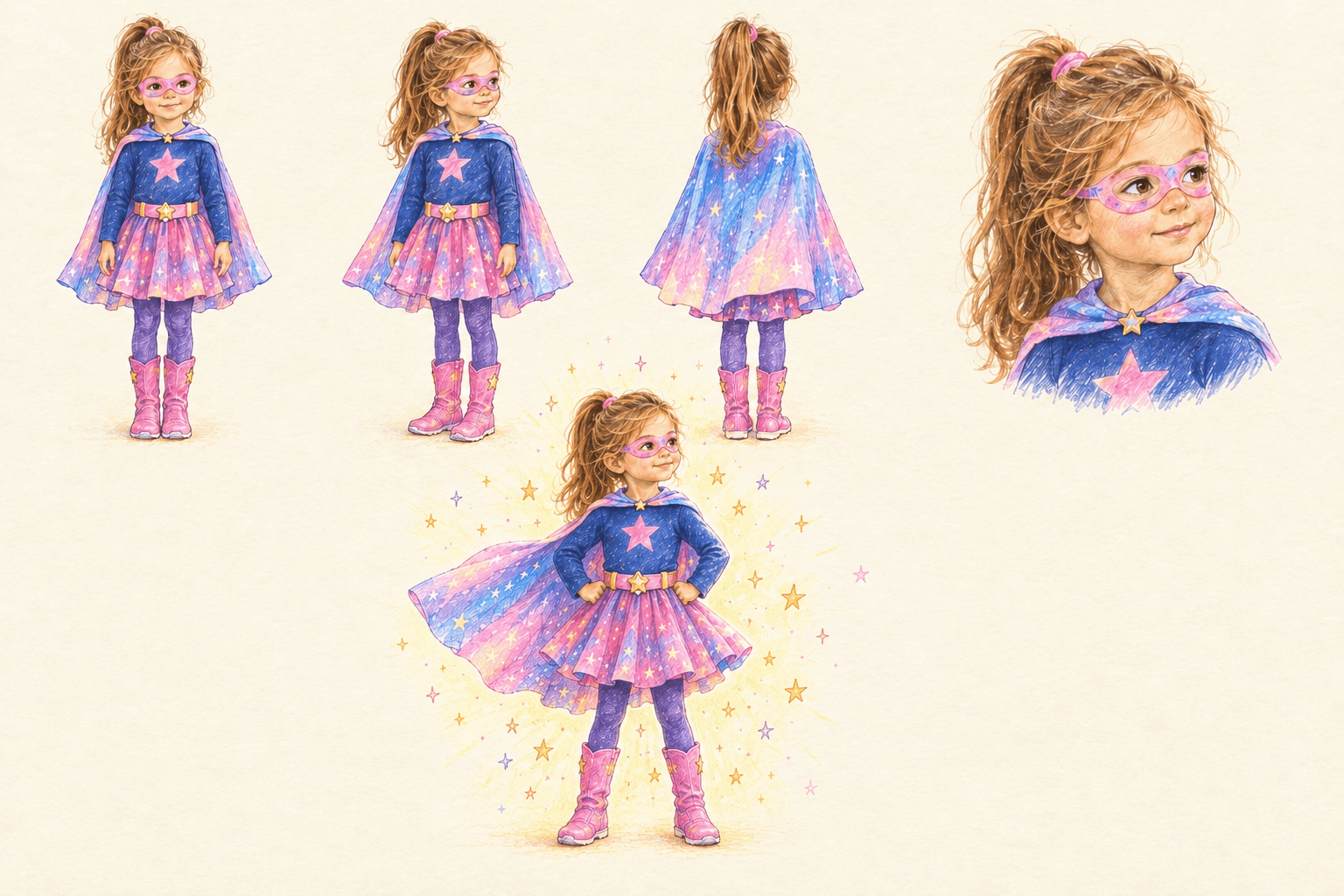
Super Sophia
Picks one thing and does it very well. It isn't her easy setting. It's the one she reaches for.
Big Sophia
Looks after her body and the big-girl things: getting dressed, getting to the toilet on time, switching the iPad off. She listens to the eels, and helps Sophia breathe slowly when everything's racing.
Brave Sophia
Goes first while she's still scared. "I'm scared, going anyway."
Clever Sophia
Finds what Sophia already knows, just when she needs it.

Luca
Lives in a cosy almond-shaped nook, with no arms and no legs. Luca's job is to shout: safe, or not safe? Luca shouts first, often gets it wrong, and is never the villain. Named after LUCA, the Last Universal Common Ancestor: the tiny living thing every living thing today comes from. Keeping safe is one of the oldest jobs there is.
Henry the Hippo
Lives in the hippocampus. Files away everything Sophia learns, and hands it back when she needs it. After a fright he files what really happened next to the old note, so next time Luca's nose doesn't go out so far.
Bella
Lives in the cerebellum, which is her bedroom, and is only in bed once everything has calmed down. She makes every movement work, and gets better at each one the more Sophia practises.
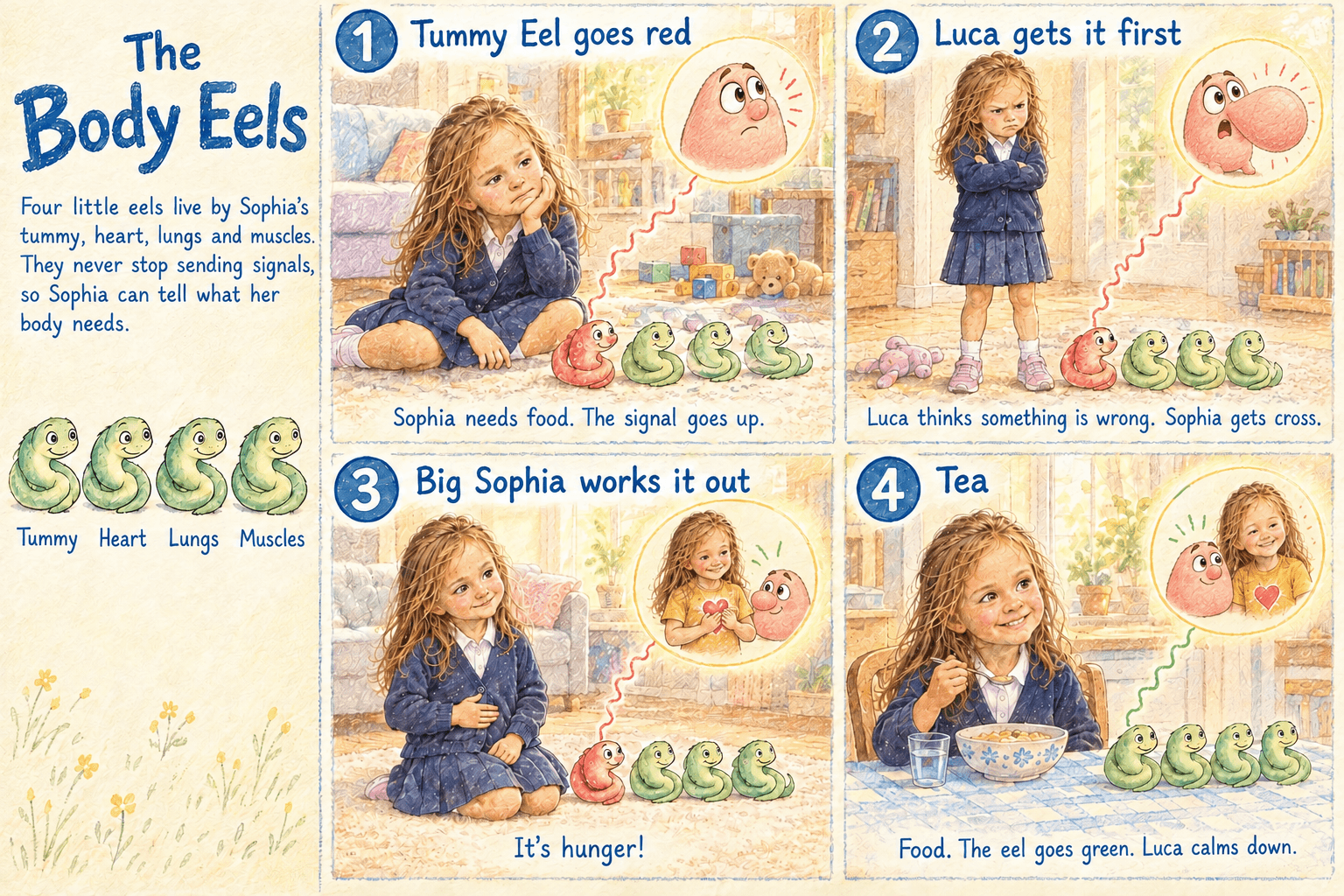

Tummy
Hungry, thirsty, or a poorly tummy.

Heart
Excited, scared, or just been running. It can't tell excited from scared.

Lungs
How her breathing is going. The one she can change on purpose.

Muscles
Tired muscles after running, climbing or carrying. It goes wherever the work is.
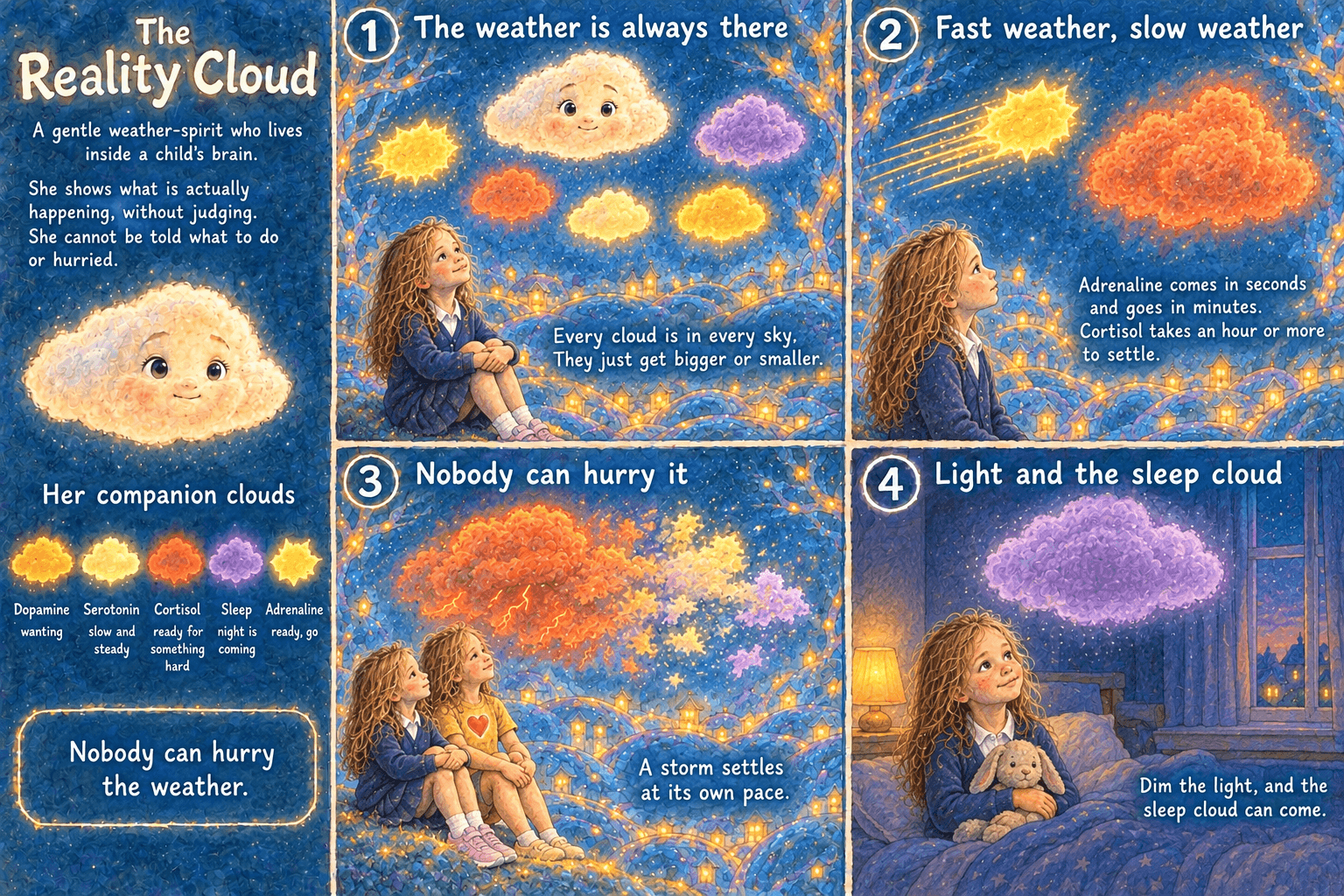
They work as a team
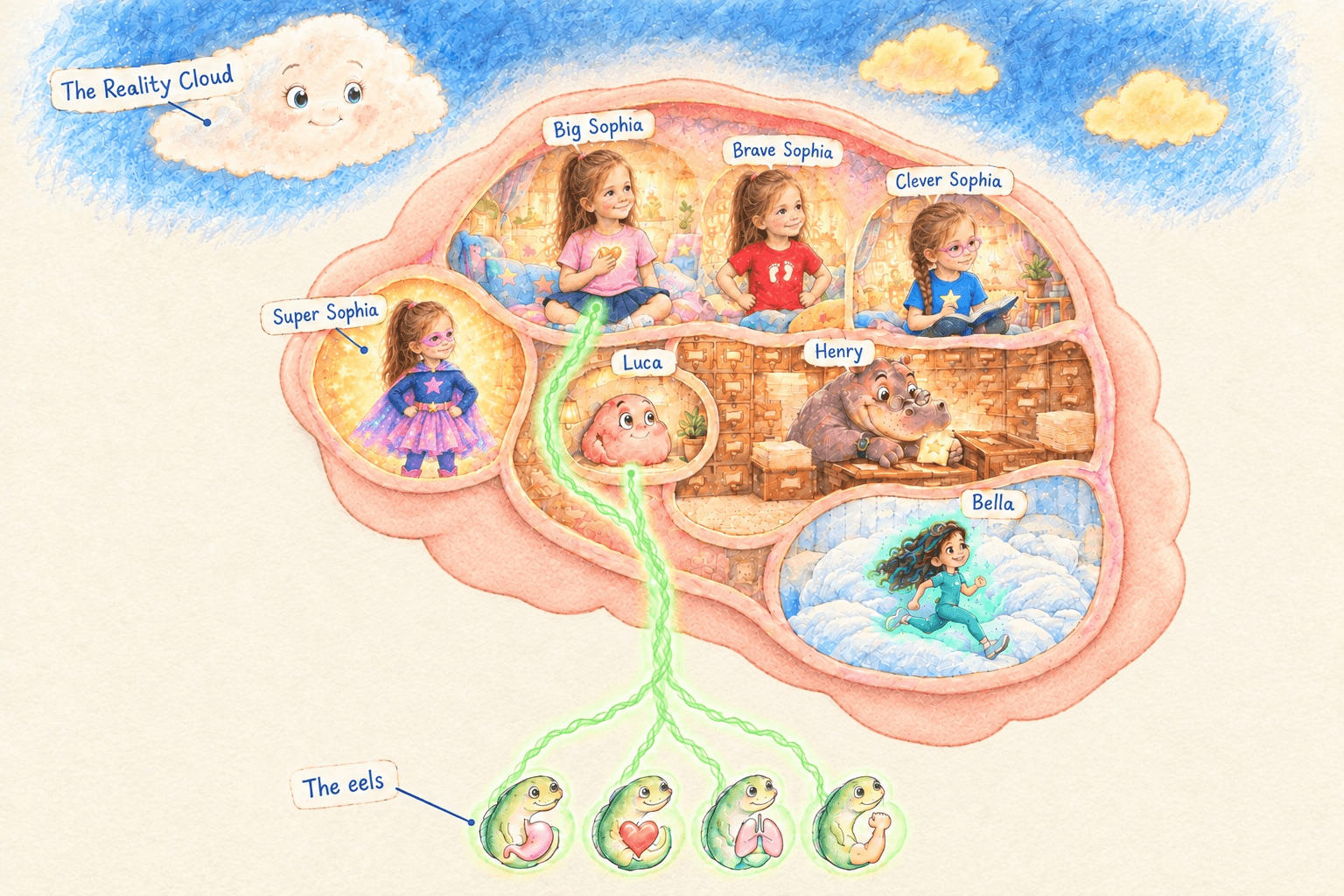
Nobody in Sophia's head works alone. When something sudden happens, Luca goes first, before anyone else has had time to look. Then the others catch up. Henry brings back what happened last time, Big Sophia reads what her body is doing and helps her breathe, and Super Sophia chooses one thing to do. Bella makes it happen. In our house we put it like this: Luca's job is to shout. Looking is everybody else's job. And deciding is Super Sophia's job.
The names sit on real science. Luca is our name for the amygdala, part of one of the oldest survival systems we have. When Luca spots possible danger, signals go out all over the brain and body at once, before the newer parts have had time to think it through. Henry is the hippocampus, which records what happened and where. Big Sophia's job of reading the body sits in the insula. Bella is the cerebellum, which co-ordinates movement and learns from every try.
Super Sophia stands for the prefrontal cortex, which holds a few things in mind, picks one and holds the others back. It is one of the last parts of the brain to mature, and it carries on into young adulthood. In a five-year-old it is still connecting up, which is why the books never make Super Sophia automatic. She is something you reach for. The other Sophias aren't separate parts of the brain. They are states Sophia moves between.
None of this stops at five. You have a Luca too, and it still shouts first. The years don't change the alarm much. What they change is how well the parts that check it are connected to it. Nobody finishes learning this, at any age, me included.
There is one finding I keep coming back to. A frightened child's alarm settles more easily with a trusted grown-up close by. So when my daughter's Luca goes off, mine is part of what happens next, whether I mean it to be or not.
That turned my question round. I used to ask how to explain all this to her. Now I ask what my own Luca does when hers fires. And when I'm tired and mine shouts first, which of us is she learning from?
What we've seen at home
I don't want to claim more than I've seen, so this is what I've seen.
Sophia comes to find me when she has managed to concentrate on one thing: getting herself dressed, reading a book, colouring without moving around, switching the iPad off without being told. I can tell before she says anything, because she looks so proud of herself. In her words: "Being Big Sophia makes me happy, proud happy, because I'm concentrating and doing one thing at a time."
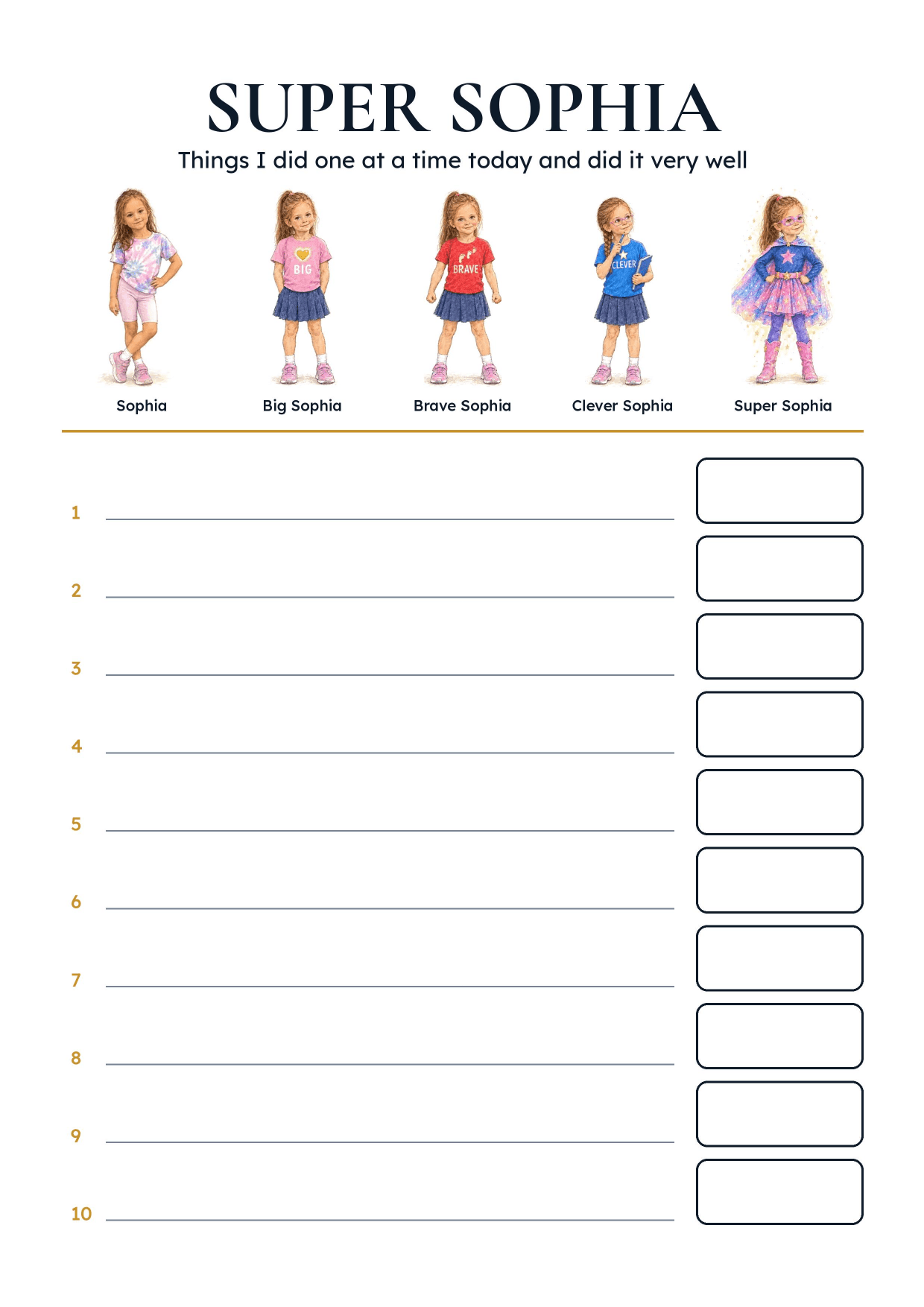
Super Sophia's Achievement Sheet and who helped her.
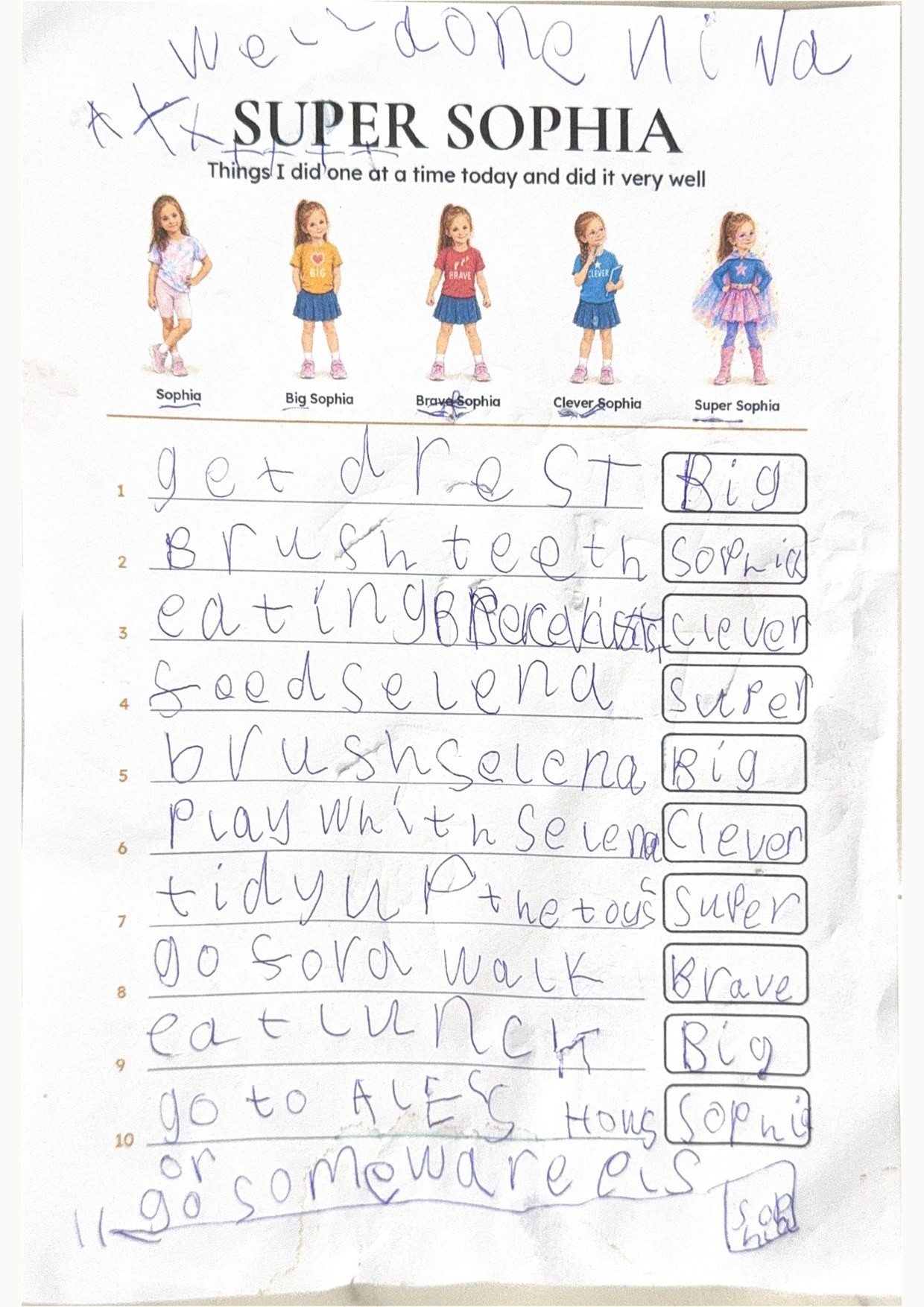
Filled in by Sophia.
She doesn't manage it every day. She wants to, and over the months it has started to show.
Nina is two, and she knows the eels too. A green Tummy Eel is a happy one. A red one isn't, and it's sending a signal to Luca. Both girls can tell you that.
Two children, watched by their own dad, isn't a study. It is what made me want to share the books.
A book with your child in it
Super Sophia also comes as a personalised book: the same story, with your child at the centre of it and Sophia alongside, and your family, your home and your front door drawn in. The first two are for Halloween.

Luca's Trick or Treat

It's Halloween – Are We Scared?
See the Halloween books


